
What are you insuring?
Agency
Clients
What are you insuring?
Agency
Clients
Commercial auto
Service companies, contractors and delivery operations with five or more vehicles. One policy, one schedule, and an agent who keeps it current as trucks and drivers come and go.
Or call
The short answer
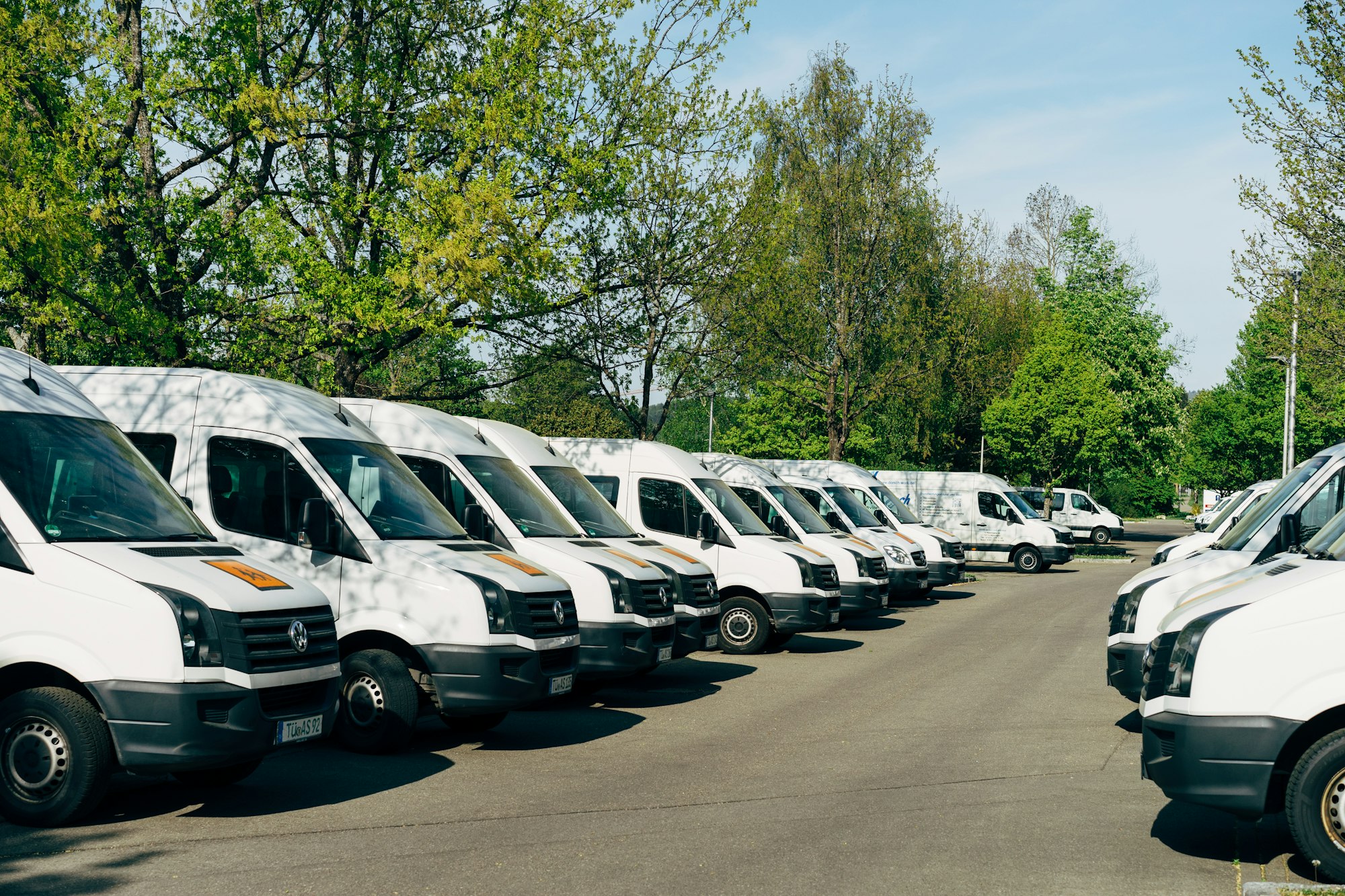
Fleet insurance is a commercial auto policy that covers five or more business vehicles under one contract, with a single renewal date and a schedule listing each unit. Carriers price a fleet on its driver records, loss history and safety practices as a group, so a well-run fleet usually pays less per vehicle than the same trucks insured one by one.
Fleet size
5 or more vehicles
Auto markets
30+ auto carriers
Changes
Units and drivers added mid-term
Licensed in
10 states, including TX and GA
Many carriers start fleet rating at five power units. Below that, each vehicle is usually rated on its own, and a single bad driver or claim can swing the whole premium. At five and above, underwriters look at the operation: how you hire drivers, how you maintain the vehicles and what your loss history says over three to five years.
That shift works in your favor if you run a tight shop. It also means the application matters more. Fleet underwriters want a clean schedule, a current driver list and loss runs that match what you tell them. We put that package together with you before it goes to market, so the first carrier to see it gets an accurate picture.
If you run fewer than five vehicles, start with our commercial auto insurance page. If your trucks haul freight for hire, the coverage belongs on a commercial trucking program.
The parts of a fleet program you’ll deal with most often.
Every unit listed by year, make, model, VIN, garage location and stated value, with the coverages that apply to each.
Everyone who drives a company vehicle, with license number and date of birth. Unlisted drivers can create a coverage problem after a claim.
Policy symbols decide which vehicles are covered. Broader symbols can pick up newly acquired vehicles automatically for a set period.
Liability for rented trucks and employees’ personal cars used on company business.
Collision and comprehensive on financed and newer units, liability only on older ones you’d replace yourself.
The driver list drives the fleet premium more than the vehicles do. Carriers pull a motor vehicle record (MVR) on every driver at new business and renewal, and some pull them mid-term. Speeding tickets, at-fault accidents and DUIs in the last three to five years all count, and a single driver with a poor record can raise the rate on the whole fleet or be excluded by name.
We recommend running MVRs yourself before you hand someone the keys, and keeping a written hiring standard on file. Underwriters ask for it. When a carrier flags a driver, we’ll tell you which violations caused it and whether another market will accept that driver before you make a staffing decision.

GPS and dash camera data now shows up in underwriting. Some carriers offer a discount for installing their telematics device or sharing data from the system you already run. Others mainly want to know you have one and act on it.
Dash cams also help after a claim. Footage that shows the other driver ran the light can turn a liability claim into a recovery. We’ll tell you which of our carriers credit the system you already use.
Fleets change every month. Here’s how changes work on a policy we manage.
1
Email the VIN, garage address and lienholder for a new unit, or the VIN and date for one you’ve sold. Drivers work the same way.
2
The carrier adds or removes the unit and adjusts the premium from that date forward. You don’t wait for renewal.
3
You get a revised schedule and new ID cards for the added vehicle.
4
Any certificate holder who needs the change gets an updated certificate.
Checklist
General contractors, property managers and municipal clients often won’t let a truck on site without a current certificate. Send us these details and we’ll issue it.
Send the contract page with the insurance requirements. It’s faster than describing it and avoids a rejected certificate.
1
Certificate holder’s legal name and mailing address
2
Additional insured wording, if the contract requires it
3
Waiver of subrogation or primary and non-contributory wording
4
Required auto liability limit
5
Project name or contract number, if requested
Many carriers start fleet pricing at five vehicles, though the cutoff varies by company. Some will write a fleet-style policy for three or four units if the operation is well organized. We’ll tell you where your count falls with each carrier we quote.
Usually, per vehicle, especially when your drivers have clean records and your loss history is good. A fleet policy also saves time: one renewal, one bill and one schedule instead of several policies expiring on different dates.
It covers the drivers your carrier has approved. Most fleet policies require every regular driver to be listed and to pass an MVR review. If an unlisted employee causes an accident, the claim can be disputed, so tell us before a new hire starts driving.
They can with some carriers. A few offer a direct discount for installing their device or sharing data. Others give underwriting credit to a fleet that tracks speed and driving behavior and coaches drivers on what it finds.
Yes, once we receive the VIN and the carrier confirms the change. Many fleet policies also give automatic coverage for newly acquired vehicles for a short period, but the window varies, so send us the details the day you take delivery.
Commercial Auto Insurance
Commercial auto insurance covers vehicles your business owns, leases or uses for work, along with the employees who drive them.
Commercial Trucking Insurance
A for-hire trucking company hauling general freight across state lines needs at least $750,000 in primary auto liability, filed with the FMCSA on…
Workers' Compensation
No.